The UVM Token: Infrastructure for a Free Economy in the World of Tomorrow
By: Arandao
Published:1404/04/19 • 09:27 ق.ظ
In the previous article, we examined Arandao's creative solutions to the fundamental problems raised in earlier posts. One of the most important topics discussed in that article was the key role of the UVM token in the economic structure of this ecosystem. In this article we intend to take a closer look at the UVM token and explore why this digital asset can also be of interest from an investment perspective.
UVM stands for Universe Meta. This name, to a large extent, reflects the token's ultimate ambition: to become the common currency of the digital world of the future. A world in which the ideals of the cypherpunk movement have become reality, and users live within a free, decentralized environment free from economic monopoly. In such a world, the existence of a decentralized monetary unit resistant to centralized control is an undeniable necessity. A token that — unlike fiat currencies — does not have an unlimited supply; whose production and distribution are not monopolized by any government or specific institution; whose transactions are transparent and traceable by all; and most importantly, that possesses a level of security that makes censorship or manipulation impossible. Money that does not serve as an instrument of hidden policies and group interests, but instead provides a foundation for economic justice and financial freedom. UVM aims to play exactly this role — a foundational role in shaping a free and sustainable economy for the coming digital age.
Do We Really Own Our Money?
In today's world, many people are nominally the owners of money they work long hours to earn — often more than 8 hours a day. The purpose of this relentless effort is to cover everyday needs and build savings for times of crisis or financial instability. From an early age we are taught: "Put your money in the bank, because it's the safest place." But does this belief still hold up against current realities? The truth is that once capital enters the banking system, many individuals are no longer the true owners of their assets. If you want to withdraw your funds in cash, you face restrictive caps. If you wish to transfer money or send a remittance, further limits on the amount and timing of transfers are placed in your way. This raises a fundamental question: why should there be a cap on my personal assets? Am I not their owner? The current monetary system — especially after the Nixon Shock and the collapse of the Bretton Woods system, which we discussed in detail in a separate article — lost its physical backing entirely. But in my view, and in the view of many analysts, the decisive blow to public trust came when electronic banking was introduced as the new model for asset management.
Although digital banking outwardly brought efficiency and convenience, in practice it became one of the primary tools for restricting individuals' real ownership of their assets. Hidden controls, transaction limits, and centralized surveillance mechanisms delivered the final blow to an already frail economic body — one that had already been weakened by the removal of the gold standard.
From Banknotes to Cards: The Path That Separated Us from Real Assets
The story began when transporting large volumes of banknotes — in addition to the physical difficulties — carried serious risks. Carrying large amounts of cash was not only highly risky, but banknotes also deteriorated over time and were, moreover, one of the most common routes for spreading disease. The idea of electronic banking took shape precisely in response to these challenges: people deposit their cash assets with banks and in return receive a card that allows them to make purchases and transfer funds — without needing to physically carry banknotes. Initially this idea seemed very practical and innovative. Carrying a single lightweight card is undoubtedly simpler than carrying hundreds of banknotes. But a problem was hidden at the heart of this convenience. As card use gradually became widespread, people used banknotes less and less. This trend made banks notice a key fact: in practice, very few people ever demand the entire balance of their account in cash. Therefore, banks need not hold physical banknotes equal to all the numbers recorded in bank accounts. This shift in perspective — apparently simple but in its depths tremendously significant — became the basis for a system in which "the number recorded in your account" does not necessarily correspond to a physically withdrawable asset. In other words, what is displayed in your bank account more closely resembles a promise to pay than a real asset under your direct control.
The Crisis of Trust and the Reality Behind Banking Numbers
The truth is that physical banknotes do not exist in amounts equal to the total numbers recorded in bank accounts. The banking system is built on mutual trust: the assumption that all people will never simultaneously attempt to withdraw their assets in cash. But if this trust breaks down for any reason, the entire system collapses. This situation has occurred time and again around the world. Whether in our own country or in large economies such as the United States or European nations, there are numerous examples of banks and financial institutions going bankrupt because they could not meet their customers' cash demands.
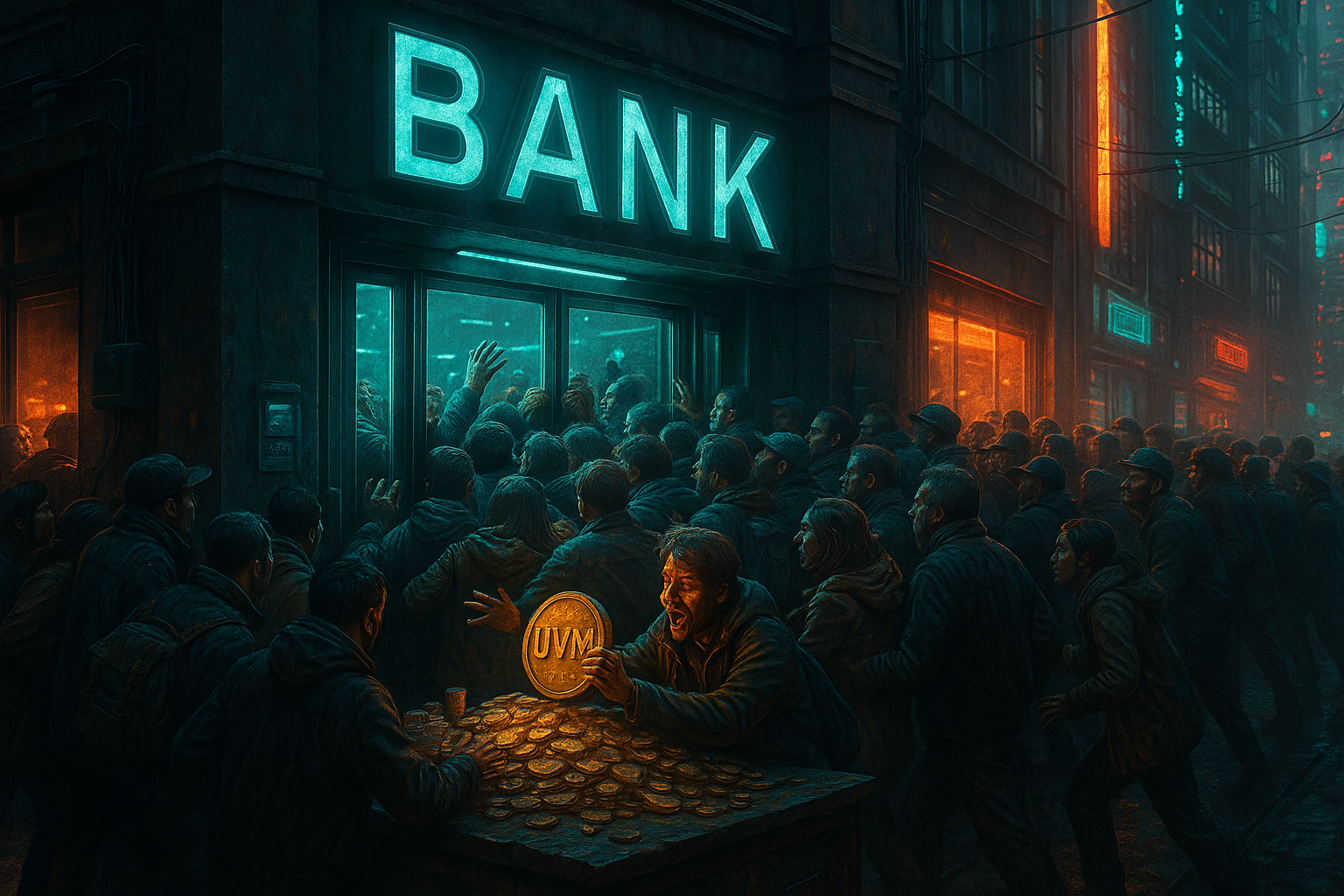
How these crises typically unfold usually begins with a simple spark: for example, a rumor spreads about a bank's insolvency or inability to make payments. This rumor, although it may initially have no concrete basis, triggers a wave of anxiety that drives people to bank branches to immediately withdraw their money. This mass rush causes a bank that until then was only dealing with a "rumor" to genuinely fall into a liquidity crisis and ultimately approach bankruptcy. This phenomenon is known in economics as a Bank Run. A phenomenon that reveals just how much the money we think we possess is, in reality, merely numbers on a screen — not tangible, guaranteed assets.
From Physical Constraint to Digital Inflation: The Power of a Button
In an era before the internet and electronic banking existed, printing banknotes was a time-consuming, complex, and limited process. Banks and governments faced numerous challenges in producing banknotes: from sourcing high-quality raw materials to implementing advanced security technologies to prevent counterfeiting, as well as the technical limitations of printing machines. For example, the world's fastest banknote printing machine, a device called the BEP, is operated by the United States government. This machine can print approximately 10,000 sheets of 50-note currency per hour — amounting to roughly 38 million banknotes per day, approximately equivalent to $700 million. This figure represents the maximum physical printing capacity within a 24-hour period. In other words, even the world's largest economic power cannot produce more than this amount of cash in a single day. But with the advent of electronic banking, these limitations effectively became meaningless. In the digital world, bank managers can, by pressing a single key, create hundreds of times this amount digitally — in a fraction of a second — with no printing required, no physical reserves needed, and no real oversight. This development, while apparently facilitating liquidity management, actually laid the groundwork for one of the great crises of our era: the creation of unbacked money at a dizzying speed. Such a process will sooner or later bring severe consequences — from runaway inflation to the erosion of public trust in national currency and the collapse in the real value of people's assets.
Hidden Devaluation: Inflation That Begins Inside Bank Accounts
We mentioned earlier that people typically keep their assets in banks to rely on them as a reserve in times of crisis. But the bitter truth is that every time banks add a new number to digital accounts — without any real backing for it — the real value of existing assets decreases. In other words, through the continuous creation of new money in the banking system, people's purchasing power declines. Money that was saved with great effort no longer holds its past value. This is hidden inflation: a gradual but highly impactful process that ultimately results in people receiving fewer goods and services for the same amount of money. In Iran, under the heaviest international sanctions, we have understood this reality clearly and with our whole being. The devaluation of the national currency, the erosion of savings, and economic instability have been a tangible and painful experience for many of us. But now, a new solution is taking shape — one that can fundamentally change the equation. UVM has come to lay a different path before the digital economy: a path on which real ownership, transparency, controlled supply, and resistance to structural inflation form the foundation of a new financial system.
Limited Supply: A Fundamental Solution to Combat Inflation
One of the essential characteristics of UVM token — one that distinguishes it from many traditional currencies and even from certain other cryptocurrencies — is its fixed and immutable limited supply. According to the token's original design, the total number of UVM tokens that will ultimately be in circulation is 1,804,000,000 units, and this number will under no circumstances increase. This supply cap is a key factor in solving one of the greatest problems of the traditional monetary system: unchecked money printing. In traditional systems, governments and central banks can print money whenever they see fit. While this may appear to manage crises in the short term, in the long run it leads to a decline in the value of money and in people's purchasing power. In contrast, UVM's limited supply model makes possible a different phenomenon: reverse inflation (deflation).
What Is Reverse Inflation?
To understand this concept, consider a simple example: Suppose you have 10 dollars and can buy 10 oranges with them. Over time, if the government prints more dollars, the value of each dollar falls and you might be able to buy only 7 oranges with the same 10 dollars. This is inflation — a decline in your purchasing power. Now imagine the same situation for UVM. You have 10 UVM and can buy 10 oranges with them. But the difference here is: the supply of UVM is limited, and as demand increases from new users — without any increase in the number of tokens — its value rises. As a result, after some time you might be able to buy 15 oranges with the same 10 UVM. This means an increase in purchasing power over time — a phenomenon referred to in economics as reverse inflation (deflation). Now, for a better grasp of the concept, go find yourself an orange seller :) This feature is one of the fundamental advantages of a limited money supply: a path for preserving the value of assets, strengthening individual wealth in the long term, and creating stability in the future digital economy. One of the interesting features of the UVM token is its extremely high divisibility. Because of the anticipated phenomenon of reverse inflation, this token has been designed so that each unit is divisible up to 18 decimal places. To put it more simply, each 1 unit of UVM consists of one quintillion (1,000,000,000,000,000,000) smaller units. This means that even the smallest amounts can be transferred and traded. For better understanding, consider a comparison with Bitcoin: In Bitcoin, each unit is divided into 100 million smaller parts called satoshis. By contrast, each unit of UVM equals 10 billion times "one hundred million"! This level of divisibility not only leads to greater precision in transactions, but also makes UVM suitable for carrying out very small, micro-scale transactions. This feature will have broad applications in the future, particularly in the digital economy and smart contracts.
How Is the UVM Token Produced?
In the design of the UVM token, the initial creation and distribution process is structured in a way that prevents centralized control and arbitrary inflation while maintaining transparency. All UVM tokens were minted in a single genesis transaction. After this stage, the tokens were transferred to a smart contract dedicated to the staking process, which is responsible for the gradual and controlled distribution of new UVM tokens. Staking smart contract address: https://polygonscan.com/address/0x873DF99ac751a6A2F7607379a83B7b26178736FD In fact, unlike many projects that gradually increase supply through mining or incremental inflation, in UVM everything is determined from the outset, and secondary production occurs exclusively through the staking mechanism under the oversight of the smart contract. The conditions of the staking smart contract for participating in the production (or more precisely, the release) of UVM tokens through this smart contract require users to meet specific requirements. These conditions are as follows: 1. Holding a minimum of 1 unit of the DNM token: This token serves as a representation of the user's membership and participation in the project's infrastructure ecosystem. 2. Holding 1 unit of the Arandao Wrapper token: We will provide detailed explanations of the wrapper token in future articles; the wrapper token is essentially a type of NFT. 3. Holding a specified ratio of UVM tokens per DNM unit: For each 1 unit of DNM token, the user must hold 214 units of UVM token in order to activate the staking contract. In the UVM token staking mechanism, users who have met the initial conditions must then choose a specific lock-up period for their assets. This period determines how long the staked tokens will remain locked in the smart contract. The three available options for the lock-up period are: 12 months 18 months 24 months The longer the lock-up period, the greater the user's Mining Power. In other words, users who lock their assets for 24 months will enjoy greater power and a larger share in the production of UVM tokens compared to those who chose 12- or 18-month periods. This design serves as an incentive for long-term investors and users who wish to play a more active role in stabilizing and growing the ecosystem. In this way, users are guided toward sustainability, commitment, and long-term value creation rather than focusing on short-term gains. Conclusion: Those who fulfill all of the above conditions can participate in the staking process and benefit from the designated rewards in the form of UVM tokens. This intelligent design ensures that token distribution is conducted in a controlled, participatory manner, free from arbitrary creation — while transparency, individual ownership, and rational participation incentives are preserved. One of the most important features of the UVM token staking process is the complete decentralization of its smart contract. After being deployed on the blockchain network, this contract has been designed such that no individual, institution, or even its original developers can edit, halt, or alter its operation. In other words, the staking smart contract operates completely independently and is not subject to the control of any human actor or institution. This very feature transforms this contract into a technological guarantee for the fair distribution of UVM. Tokens are distributed solely based on the logic defined in the contract code and on the basis of users' actual participation (meeting the staking conditions) — not based on behind-the-scenes decisions or systemic manipulation. This type of design — built on the principles of transparency, immutability, and trustlessness — is the beating heart of the philosophy of UVM and Arandao: a place where technology replaces blind trust in individuals.
Spendability: A Vital Factor in the Success of a Digital Currency
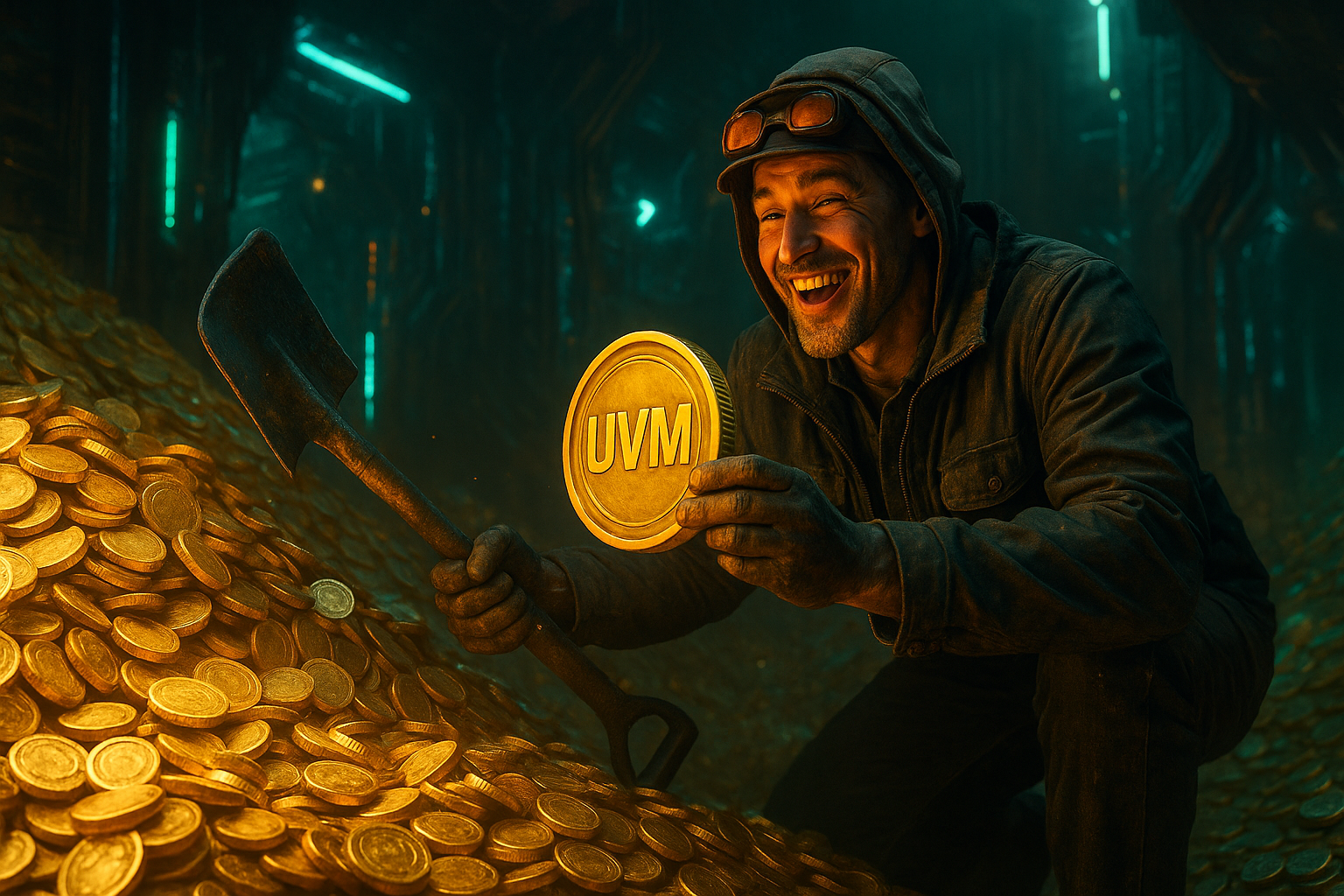
In any cryptocurrency project, spendability is one of the vital components for its long-term sustainability and acceptance. Merely possessing a token with strong technical features or a fair distribution structure is not sufficient for success. If a digital currency lacks clear and practical pathways for use in the real or digital world, it will sooner or later face serious challenges regarding circulation, acceptance, and valuation. One of the fundamental strengths in the design of the UVM token is the precise and practical design of its spending mechanisms.
At present, at least three main pathways for using UVM as a payment and exchange instrument have been envisioned. 1. Decentralized Store with UVM as Currency: One of the key advantages of the UVM token is its use as the common currency of the Arandao ecosystem's decentralized store. On this marketplace platform, all transactions, purchases, and sales are conducted using the UVM token. This not only contributes to the token's immediate and tangible utility, but also makes it part of users' everyday digital lives. The existence of a built-in, pre-designed store platform is an important advantage that many major cryptocurrencies — including Bitcoin — lacked in their development journey. For example, while Bitcoin was introduced with the goal of becoming the world's digital money, the absence of a default, integrated storefront system was one of the factors that prevented the full realization of this vision — a topic we discussed in a separate article. By contrast, UVM has been paired with a decentralized store structure from the very beginning — a smart decision to ensure steady token circulation and generate real demand. 2. Gateway Reward Algorithm: A blockchain-based incentive to purchase. One of the smart spending mechanisms for the UVM token is the use of the Gateway smart contract — a system that functions as an incentive mechanism for increasing interaction between sellers and buyers. This contract, through a unique and transparent algorithm, provides the foundation for a blockchain-based reward system. Here is how it works: The seller can allocate a portion of the final product price to this smart contract. When the customer makes a purchase, a portion of the payment enters the Gateway algorithm. As a result, customers receive rewards based on the extent of their participation in purchasing with UVM tokens. For example, under the current structure, for every 600 UVM tokens that enter this contract through a product purchase, the customer receives 50 UVM tokens as a reward. This reward is an effective incentive for purchasing from the internal decentralized store of the ecosystem rather than from traditional or external markets. It is worth noting that the Gateway algorithm always keeps a portion of the received tokens in a Safe (secure and not immediately withdrawable) state. These tokens are only released when users fulfill certain conditions based on the logic of the smart contract. This feature means that a portion of UVM tokens is permanently or long-term removed from circulation — something that will have a positive long-term impact on supply control and value preservation of the token. This system, in addition to motivating buyers, also helps sellers attract more customers and create more effective market engagement by allocating a portion of their income to rewards — all within a transparent, automated, and tamper-proof environment based on blockchain technology. We will elaborate on the Gateway further in future articles. 3. Smart Supply Locking Staking Algorithm for Value Preservation: In the section on staking smart contract conditions, it was noted that for each unit of DNM token that users intend to stake, they must also hold 214 units of UVM token. This specified ratio directly leads to a large volume of UVM tokens being locked in the staking contract — tokens that are effectively withdrawn from the free market cycle and enter a long-term, controlled process. To better understand the scale of this, it is sufficient to look at the total number of DNM tokens, which is defined as 10 million units. If we assume that all of these tokens participate in the staking process, demand for UVM tokens would reach approximately 2.14 billion units — which is even greater than the total final supply of UVM (1.804 billion units). This reality reveals a fundamental point: The potential demand for staking exceeds the total supply of UVM. As a result, a very large portion of UVM tokens will be locked permanently or long-term in staking contracts. This has two important consequences:
- A significant reduction in circulating supply, and as a result, the preservation or increase in token value over the long term.
- Reinforcing the incentive to hold the token rather than sell quickly, which contributes to economic stability within the ecosystem. The staking algorithm, alongside the other mechanisms designed in the UVM project, ensures that this token is not merely an exchange tool, but an instrument for building trust, fostering long-term participation, and sustaining growth in the decentralized economy.
You may have heard the names of famous digital currencies such as Ethereum, BNB, Tron, or Cardano — large projects with enormous capital bases and an established position in the cryptocurrency market. But have you ever asked yourself what the primary use of these currencies is? And under what conditions can they actually be spent? The answer is simple: Currencies like Ethereum or BNB were primarily designed to create a platform for executing decentralized smart contracts. More precisely, individuals can build and execute smart contracts on these networks, and for every execution of such a contract, they must pay the network fee in the native currency of that platform. Consequently, these currencies are only spent when a smart contract is invoked. By contrast, consider this model alongside the structure of UVM's decentralized store: on the UVM platform, buying and selling goods and services — a daily and widespread activity in most people's lives — is conducted directly with the UVM token. This means the token's spendability is tied to the real and continuous needs of users, not merely to specialized or developmental activities. Now think about a simple but important question: in everyday life, do people more often need to buy goods and services, or to execute smart contracts? We leave the answer to your own judgment. But the difference is clear: UVM, by focusing on tangible and universal use cases, has gone a step beyond merely being infrastructure and positioned itself as a real medium of exchange in the digital world of tomorrow.
Why Can the UVM Token Be a Valuable Investment Option?
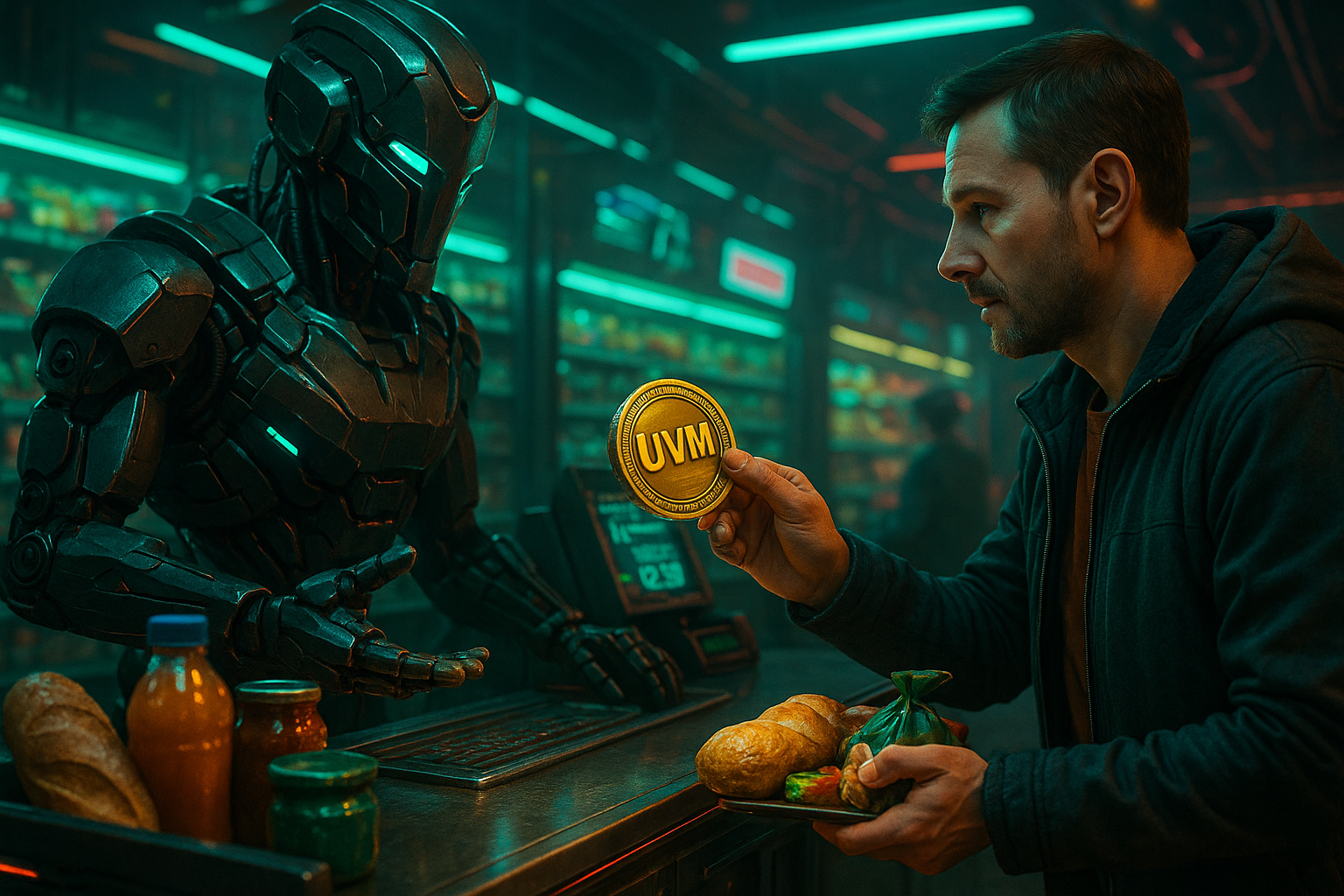
Based on everything we have examined so far, the UVM token possesses rare potential not only technically and practically, but also from an investment perspective. Below we discuss the most important reasons why this token could hold a worthy place in the portfolios of forward-thinking investors:
1. Utility in Everyday Life
UVM is a utility token. The existence of multiple spending algorithms — such as the decentralized store, the Gateway reward system, and the staking algorithm — has allowed this token to move beyond being merely a digital asset and become a real tool for daily transactions. This feature guarantees sustained, long-term demand backing for the token.
2. Decentralized and Transparent Structure
UVM is implemented on the blockchain and is fully decentralized. No institution, group, or individual can control or alter its mechanisms. All transactions and processes related to staking, rewards, and distribution are conducted transparently and visibly to the public — an element that plays an essential role in building public trust.
3. No Team Allocation or Developer Share
Unlike many cryptocurrency projects, UVM was designed from the outset so that no share has been reserved for the development team, founders, or early investors. All UVM tokens are distributed transparently according to the staking algorithm. This feature places it among the rare projects where 100% of the supply belongs to the user community.
4. Limited Supply and Growing Demand
As discussed earlier, the total number of existing UVM tokens is fixed and known (1.804 billion units), and this amount cannot increase under any circumstances. On the other hand, the staking model is designed such that in the case of maximum participation, demand for UVM exceeds total supply. This structure creates positive demand pressure and preserves the token's intrinsic value in the long term.
5. Locking of a Large Portion of Tokens in Long-Term Contracts
A significant portion of UVM tokens are locked in the staking process with lock-up periods of 12, 18, and 24 months. This leads to a sharp reduction in circulating supply and prevents severe volatility caused by panic selling — something that professional investors regard as an important factor in price stability.
6. Alignment with the Goals of a Free Economy and Cypherpunk Ideology
UVM is not merely a financial tool; it lies at the heart of a new worldview whose goal is to create the infrastructure for a free economy and a decentralized digital world. Investing in such a project is participating in building a future in which ownership, transparency, and financial freedom are foundational principles.
Summary:
Taking all aspects into account — from the limited and transparent economic model to real-world use cases and broad user participation — the UVM token is not only a medium of exchange but a capital asset with high growth potential and controlled risk.
Investing in UVM is a choice for those who believe in a decentralized future, a free economy, and the role of individuals in shaping new financial structures. I hope you enjoyed reading this article — stay tuned for more.