Arandao: Where Power Belongs to the Community
By: Arandao
Published:1404/05/20 • 02:49 ب.ظ
In the world of DAOs, many projects claim to be "decentralized" — but when you look closely, you see that behind the scenes there is still a group or specific company pulling the strings. Arandao is one of the rare examples that has turned this claim into reality; everything — from submitting proposals to voting and executing decisions — takes place directly on-chain. That means there is no step that goes off-chain or requires the approval of any single person.
To better see the difference, let's examine a few well-known examples:
ApeCoin DAO: This is the governance organization behind the ApeCoin token and the Bored Ape Yacht Club ecosystem. It holds its votes on Snapshot. This approach is fast and cheap, but because it happens off-chain, the results are not applied directly to the smart contract — so it cannot be called 100% decentralized. Moreover, ApeCoin's treasury is held by the centralized exchange Coinbase, which means financial control effectively sits outside the DAO.
DappRadar DAO: This is the governance organization of the well-known platform for tracking and analyzing decentralized applications (Dapps). It allows users to submit proposals, but the founding team can veto any proposal at any time. This means that ultimately the real decision-maker is the team, not the community.
But Arandao has changed the game. Here, no one holds a "secret key" or an "emergency button." The treasury and all financial resources are locked inside smart contracts that can only be accessed through a direct community vote. The outcome of every vote is executed automatically, exactly as recorded. This means genuine transparency and zero possibility of external interference. The DAO's power within the Arandao ecosystem is limited — but deliberate: In the Arandao ecosystem, the DAO does not command the entire project and cannot change everything from the ground up. Its scope of authority has been defined clearly and transparently in advance, and it only has access to the areas that may need adjustment or improvement in the future due to market conditions or marketing strategies. This design model has one important reason: platform security. When a smart contract is deployed on the blockchain, if there is no way to modify it, any problem or improvement need becomes practically impossible to address — which can be dangerous for the system. On the other hand, if this access exists but is held only by a single owner or central team, it can no longer be called decentralized, and community trust erodes. The logical solution, therefore, is to place control of the areas most likely to need change in the hands of the DAO. This way, every adjustment or update is carried out through the collective vote and wisdom of the members themselves, not by any one person's decision. The result? The platform stays both secure and decentralized.
In the Arandao ecosystem, the DAO's access rights cover the following:
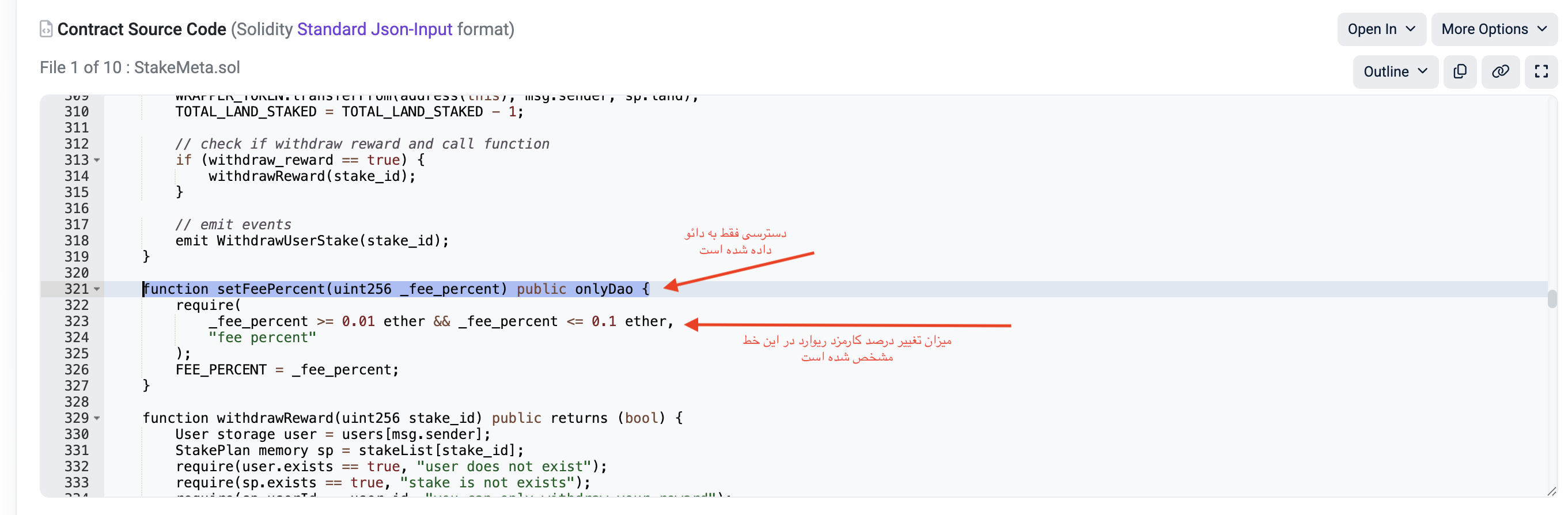
1 — Changing the Staking Fee: One of the most important tools that Arandao has placed in the DAO's hands is the ability to change the reward fee for staking. This change is not unlimited; the permitted range is fixed at 1% to 10%, and no value outside this range can be registered. The collected fee goes directly to the DAO treasury to be spent on platform development and on investing in projects and startups that use Arandao. The reason for this authority is straightforward: the market is never static. The DAO can raise or lower this fee in accordance with market conditions, the price of the UVM token, and the treasury balance, in order to maintain equilibrium. For example: When the UVM price rises too high, reducing the fee increases supply and prevents runaway price growth. Conversely, when the price is falling sharply, increasing the fee reduces staking output and helps prevent a further price collapse. All of these processes are implemented as a specific function inside the staking smart contract, and every change the DAO applies is recorded on-chain and transparently on the blockchain. Staking smart contract address: https://polygonscan.com/address/0x873DF99ac751a6A2F7607379a83B7b26178736FD
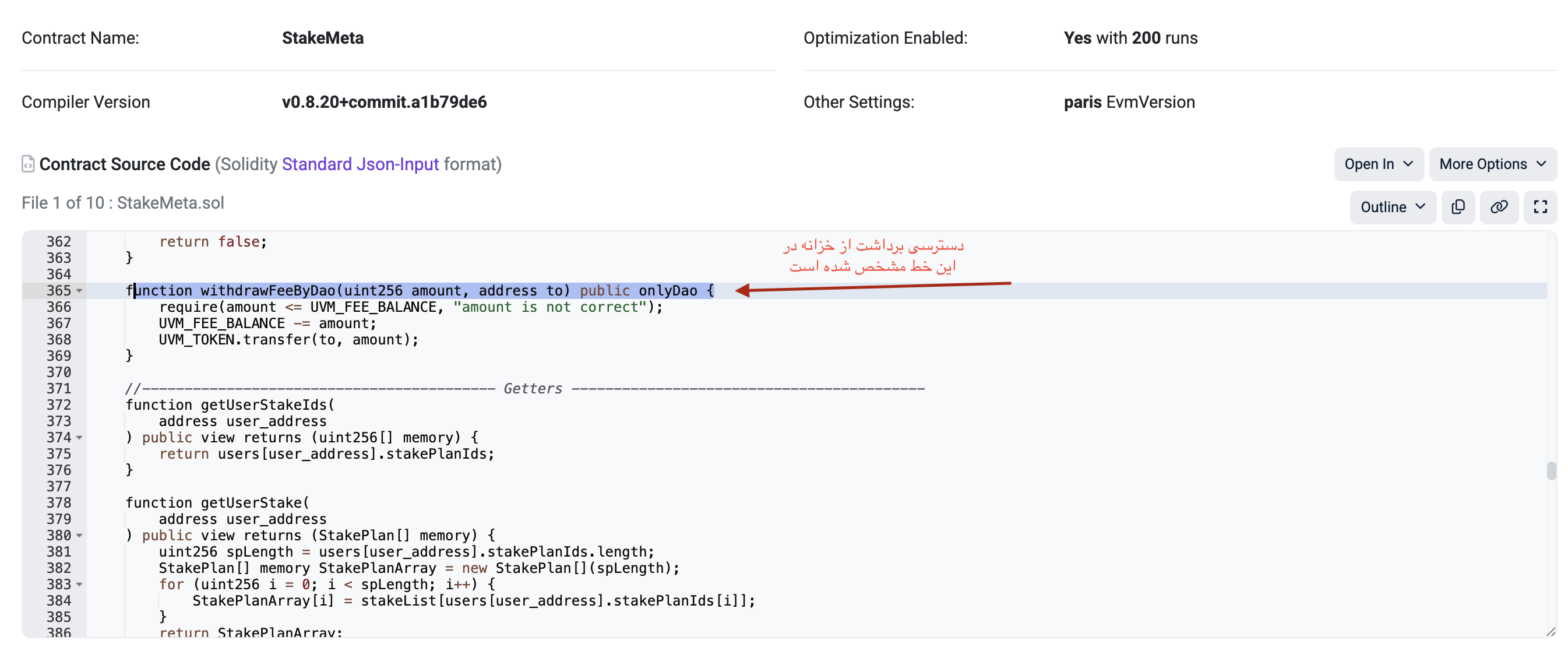
2 — Withdrawing from the DAO Treasury: Another important authority that Arandao has granted the DAO is the ability to withdraw from the DAO treasury. This withdrawal can only occur in one way: when a formal proposal is registered and a majority of members vote in favor. The purpose of this authority is clearly defined; the treasury's resources may be used for expanding the Arandao ecosystem or investing in startups and emerging projects. This means the DAO is not merely a decision-making system — it is also a support and investment arm for the growth of the entire network. Interestingly, this opportunity is not reserved for veteran or insider members. Companies and small startups can also submit their own proposal and request use of the treasury. If their idea is transparent, practical, and compelling — and they can earn the trust of the members — they can access treasury resources with sufficient votes. Technically, this treasury is defined as an independent pool inside the staking smart contract, and all designated fees (such as the staking fee under DAO control) are automatically transferred to it. As a result, every transaction and withdrawal is transparent, traceable, and 100% on-chain — without a single moment of dependence on centralized systems.
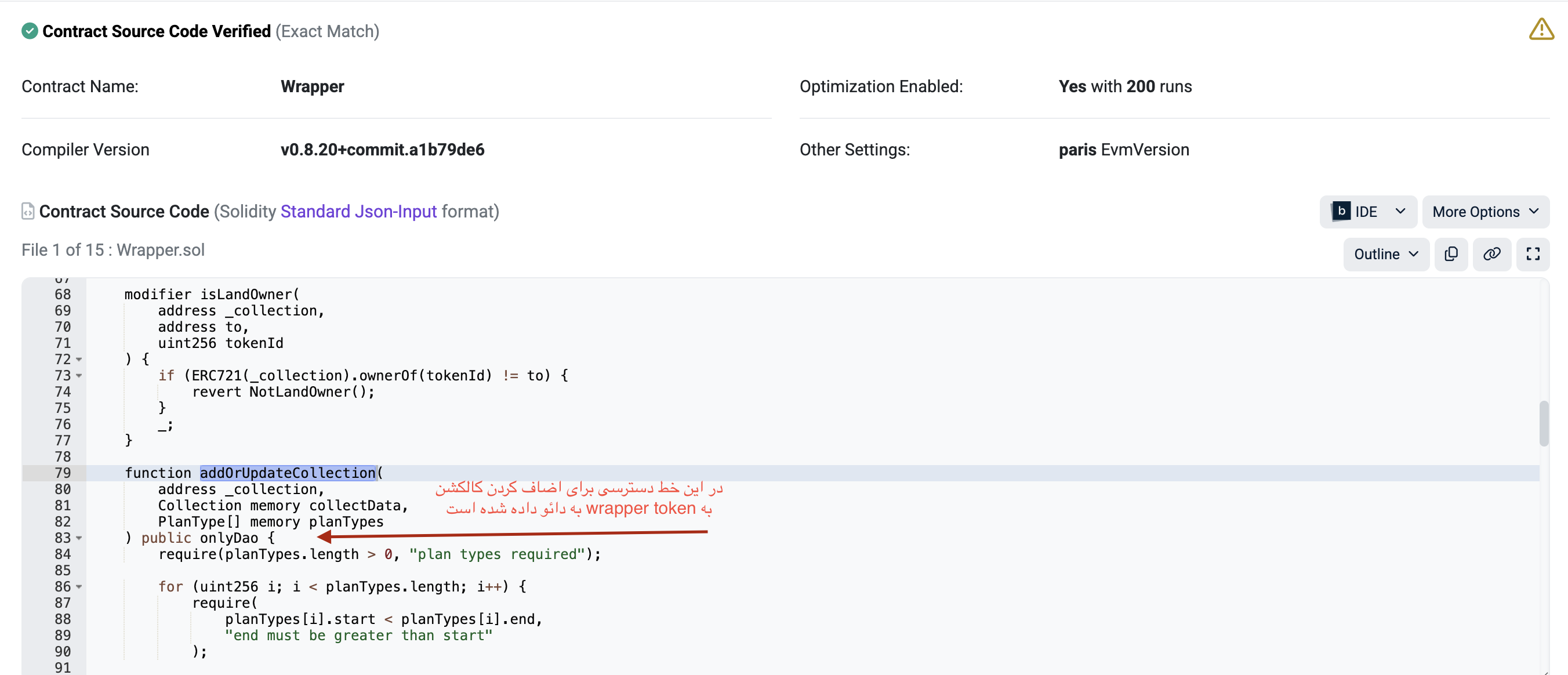
3 — Verifying NFT Collections for Conversion to a Wrapper Token:
One of the most interesting and exciting pieces of infrastructure in Arandao is the Wrapper Token capability. This mechanism allows NFT collections — once granted this capability — to enter the Arandao ecosystem, become eligible for staking, and in return generate UVM tokens. However, this is a special feature that is not granted to just any NFT or project. To receive it, projects must submit a formal proposal to the DAO. The verification process then begins, which falls under the DAO's direct authority. At this stage, DAO members evaluate the quality, credibility, and potential of the project and decide whether the collection may enter the Wrapper Token cycle. This ensures that only projects that are truly valuable and trustworthy can access this system and make use of the ecosystem's resources. This authority both promotes the controlled growth of the network and prevents weak or suspicious projects from entering, thereby preserving the credibility and security of the Arandao ecosystem. Wrapper token smart contract address: https://polygonscan.com/address/0xfcBeF011C9716Bf922F055F65e217A3b8713Cf43
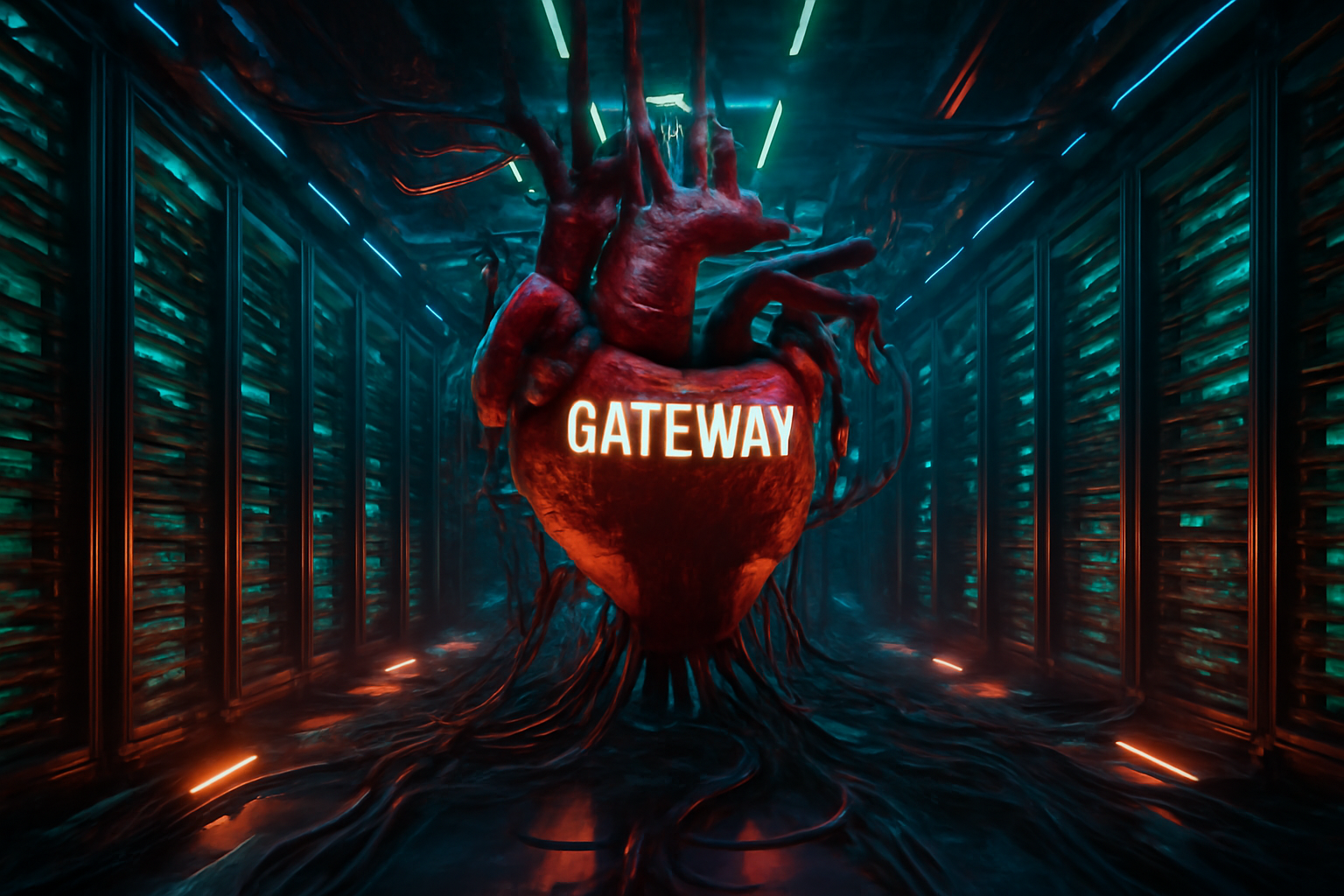
4 — Withdrawing from the Gateway Smart Contract: The Gateway can be thought of as the beating heart of the Arandao ecosystem. All profit margins from products sold in the decentralized store are transferred directly to this smart contract. The crucial point is that the only entity with permission to withdraw from it is the DAO. Of course, even these withdrawals are governed by rules and limits. To use these resources, a formal proposal must be submitted and approved, and its stated purpose must be to expand the UVM liquidity pool. Even then, even with an approved proposal, it is not possible to withdraw the entire balance at once — only 10% may be withdrawn at a time. The 10% limit is not arbitrary. A portion of Gateway resources is earmarked for paying distributor commissions, and this withdrawal cap ensures there is always sufficient balance available to meet those payments. The entire process is implemented as a specific function inside the Gateway smart contract, and every withdrawal or change is recorded transparently on the blockchain. Gateway smart contract address: https://polygonscan.com/address/0x5C1d232216e515133C6E4D31b0c23d6e53F03A0b
5 — Withdrawing from the DAO Secure Vault: Arandao maintains, in addition to the main treasury described above, a secure vault — a place where all of the DAO's important and valuable assets are held. The purpose of this vault is to execute the DAO's macro and long-term strategies. Unlike some funds that impose percentage limits or amount caps on withdrawals, this vault has no strict restrictions on deposits or withdrawals. The only condition for using it is submitting a formal proposal and obtaining sufficient votes from DAO members. In this way, all decisions about these assets are made completely transparently and on the basis of collective wisdom. Technically, the secure vault supports holding a wide variety of assets — from ordinary ERC20 tokens to NFTs (ERC721) and even multi-token assets such as ERC1155. This flexibility enables the DAO to manage a diversified portfolio of assets in a secure and decentralized manner. To better understand it, one can imagine this vault as a glass safe: anyone can place something inside it, but only the DAO can make a withdrawal. In Arandao, any asset that should not be under the direct control of a single person or central team is transferred to this vault. The community thus holds full control over the resources and can decide through transparent voting where and how those resources are used. DAO Secure Vault address: :https://polygonscan.com/address/0xf82171cb46399008eb039c456667c9b6c05cc12f

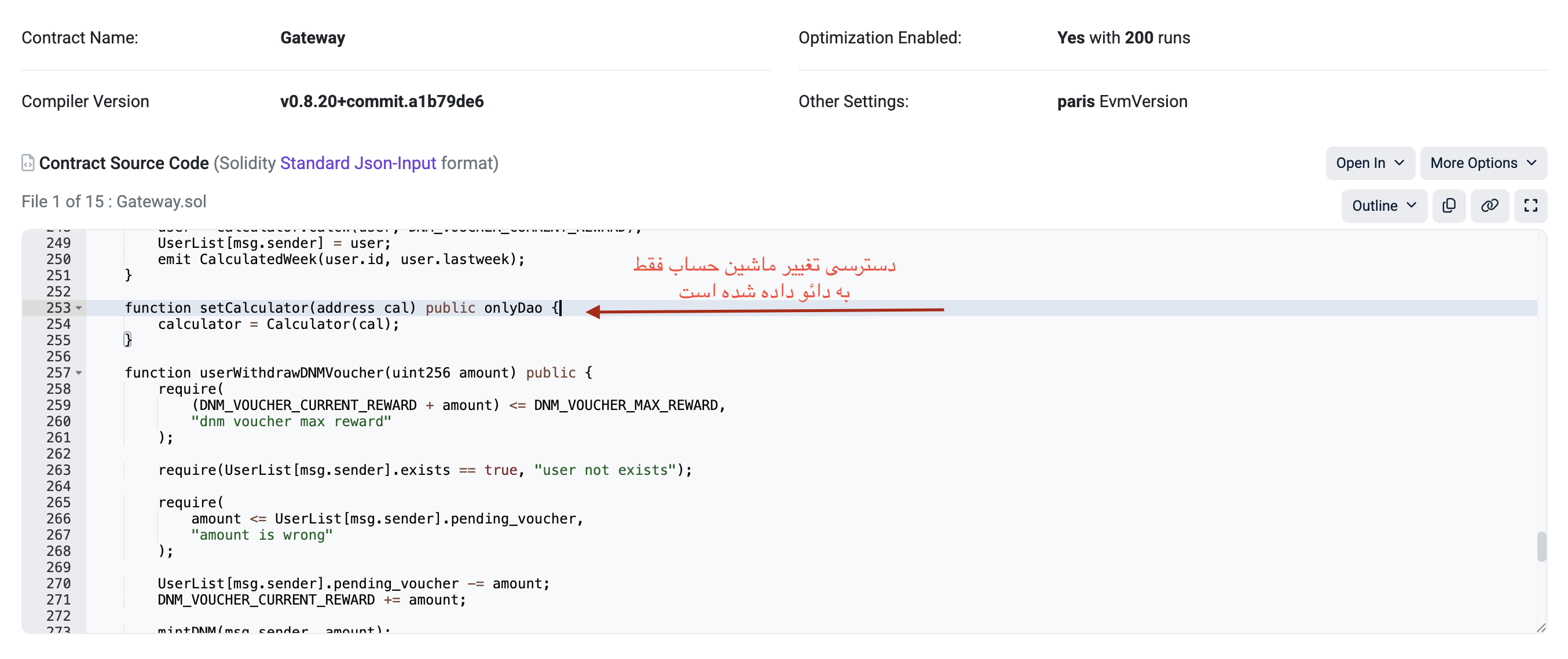
6 — Changing the Gateway Calculator: The Gateway smart contract is not merely a holding place for the decentralized store's profit margins; it also has a reward system that pays out to those who play a role in expanding the platform. However, determining exactly how much reward each distributor receives is not handled directly inside the Gateway itself. For this, the Gateway sends each distributor's data to a separate smart contract called the Calculator. This Calculator, based on the received data, computes the precise reward amount and returns the result to the Gateway. The Gateway then grants the distributor permission to withdraw their reward accordingly. The authority the DAO has here relates to changing the reward amounts inside the Calculator. For example, if the current rate gives 50 UVM for every 600 BV, the DAO can decide to change this ratio — for instance, awarding 60 UVM for every 400 BV. Of course, all of these changes are only possible through a formal proposal and community approval. More importantly, the DAO has no access to change or manipulate the Gateway smart contract itself — it can only adjust the Calculator's parameters. This means both the flexibility to tune rewards and the security and stability of the Gateway's core structure are fully preserved.
Summary of the DAO's Authority in Arandao: Everything described above represents the only access rights the DAO holds over the smart contracts in the Arandao ecosystem. Beyond these areas, the DAO is under no circumstances permitted to modify or interfere with any other part of the contracts. All of these authorities relate to the areas where changes or adjustments to the smart contracts themselves may be needed. But the DAO's activities are not limited to the blockchain. Off-chain, the DAO can make decisions on other important matters — things that do not require any change to the contract code — such as:
· Selecting or changing the logo and visual identity
· Managing and upgrading the Arandao indexer
· Addressing and acting against scam stores
· Designing and approving marketing strategies
· Defining the project's overarching roadmap
In practice, the DAO community is a genuine space for collective wisdom and group decision-making — a place where every member can freely voice their opinion and play a direct role in shaping the direction of the project. This model ensures that decisions are both technically secure and managerially grounded in the vote and participation of the entire community.
The Arandao Foundation and Annual Election: The Arandao community holds a general election annually, in which 21 people from among the members are chosen to serve as the Arandao Foundation. These 21 individuals are the community's official representatives and bear executive responsibilities within Arandao. As the DAO's executive body, these individuals hold signing rights on the smart contracts discussed above and are responsible for carrying out the decisions related to those contracts. In other words, they play an executive role in implementing changes and community decisions, while all decisions must still be made through a community vote and approval. One of the main reasons for this arrangement is to increase security and speed in decision-making. Imagine the DAO community grows to more than 10 million members. In such circumstances, executing an approved proposal would require finding at least 5 million people to sign it — a process that could be extremely time-consuming and sometimes impossible. Therefore, to preserve security and increase operational speed, executive responsibility for proposals is delegated to these 21 representatives. Furthermore, given the possibility of unforeseen circumstances — such as an accident or the loss of a foundation member's wallet — the smart contract is specifically designed so that if at least 15 members of the foundation sign, the proposal is executed automatically. This mechanism ensures that even in unexpected situations, executive decisions can be carried out without interruption. The general election also ensures that the DAO community not only has a voice in major decisions, but also participates in choosing the individuals who bear executive responsibility. This process guarantees that all of Arandao's decisions — whether at the level of smart contracts or otherwise — always move forward with the input and approval of the members.
It is important to know that none of these 21 individuals can make decisions unilaterally. Their responsibility is solely to execute decisions, and all strategic or fundamental changes must be adopted by the community through a general vote. This process ensures that all of Arandao's decisions — whether at the level of smart contracts or otherwise — always proceed with the consent and approval of the members. This election takes place every year on a fixed date, the entire voting process is carried out fully on the blockchain, and each DNM token unit is equivalent to one vote.
Conclusion: The DAO structure in the Arandao ecosystem is an intelligent and innovative structure that, while maintaining high operational speed, is designed to be fully decentralized. This structure gives users the ability to truly engage in collective decision-making and participate in key choices. Unlike centralized systems where decisions may be made behind closed doors, in Arandao all decisions are made in full transparency, and every member of the community can make their voice heard and have a genuine impact. This system means that Arandao is not only a platform for executing smart contracts, but also a democratic and participatory space where every decision made is grounded in collective votes and member collaboration. This process enables projects and ideas to advance with the genuine satisfaction and support of the community, and from start to finish, everything remains under the oversight and decision-making authority of the members themselves. By establishing this unique structure, Arandao is becoming a model for other decentralized projects — one that preserves operational speed in its executive processes while making the best possible use of democracy and transparency. Along this path, DAO members serve not merely as users, but as the primary decision-makers in shaping the future of projects — and this means Arandao has opened the way to the true realization of collective power.
We hope you enjoyed reading this article.