How Did Arandao Build a New Order for the Economy?
By: Arandao
Published:1404/04/12 • 03:43 ب.ظ
Hello to all members of the Arandao family We are glad to be with you again in the continuation of the "Arandao — A Little Deeper" article series. So far we have learned together what a DAO is, got acquainted with the DNM token, understood what makes an indexer different from a regular website, and in the previous article we explored the fundamental problems that Arandao has identified. Now it's time to take one step further... In this article, we want to examine the solutions that Arandao has offered to address those problems — innovative, transparent solutions that are completely different from traditional systems. So stay with us until the end of this article; we are about to take an exciting journey into the world of decentralization, free economy, and a new financial future.
How Did Arandao Solve the Problems?
To address the problems of user data exploitation, lack of supply chain transparency, and unfair pricing, Arandao introduced an innovative concept called D-Market. In fact, D-Market is a decentralized online store that operates on NFT and blockchain technology. In this store, sellers convert their products into NFTs, and buyers can purchase them using digital currency. Every product in D-Market has two defined types of value:
Business Value (BV): which represents the market profit margin,
Seller Share: which equals the actual cost of production.
This model means that buyers know exactly how much of the price they pay goes toward the cost of goods and how much is purely market profit — something that is never transparent in traditional systems. In many cases, users unknowingly pay up to 200% of the product's price as market profit, without being aware of it. After each transaction, the smart contract instantly transfers the seller's share to their wallet and moves the Business Value to the Gateway smart contract. We will explain the Gateway in future articles. Another important advantage of D-Market is the elimination of intermediaries. On this platform, users interact directly with sellers and all transactions are carried out by smart contracts; this means complete transparency and direct interaction without control or manipulation by any central authority. But perhaps the most important strength of D-Market lies in its connection to Arandao's decentralized ecosystem. In this ecosystem, unlike traditional platforms, there is no CEO or board of directors who holds shares or ownership of the platform. As mentioned earlier in the DNM token article, Arandao's equity is distributed in tokenized form as DNM tokens among active users on the platform. How is this distribution carried out? DNM shares are allocated to three categories of participants, the two main groups of which are:
Buyers: for every 100 BV units generated, they receive approximately 0.08 DNM,
Sellers: for the same amount, they receive approximately 0.02 DNM.
This system creates shared interests between buyers and sellers. On one hand, buyers are motivated to purchase products they need from D-Market rather than traditional markets, both to earn a greater share of the platform and to benefit from pricing transparency. On the other hand, sellers offer higher-quality products at more competitive prices to attract more buyers. And this means: A win-win, two-sided transaction, on a transparent, decentralized and monopoly-free platform. After each purchase, customers receive their digital receipt in the form of an NFT. These receipts, stored on the blockchain, are completely secure, transparent, and immutable. But most exciting of all, sellers can use these very NFTs to build a smart customer loyalty club — a place where every purchase becomes a bridge to a lasting relationship, special discounts, and a personalized experience for each customer.
Arandao has gone further and introduced a feature called "Launchpad" — a platform for startups seeking investment. If you own a startup business or have an innovative idea and need funding, you can list your project on this Launchpad with the approval of the Arandao community and receive support from community investors. Arandao's funding model is based on Crowdfunding. In this model, the required capital is raised through the participation of many individuals with small amounts but at a large scale. This process takes place online, transparently, and in a decentralized manner, providing a reliable environment for ideas and businesses to grow. In fact, whether you are a seller of physical goods, a service provider, or even just someone with an idea, Arandao has a solution for you — an intelligent and open platform for realizing entrepreneurial dreams in the decentralized world of Web3.
Arandao has offered a creative solution to the problems of closed and inefficient banking structures, the challenge of inflation, and sanctions, but before addressing the solution, to better understand the root of these problems, we need to look at the history of money: At the outset, the first model for conducting transactions was "barter" — exchanging goods for goods. This method was the only known form of exchange for years. But it had fundamental problems; among them the lack of scalability (since some goods could not be divided into smaller parts), the absence of a clear standard of value, and even the spoilage of some goods. One of the main reasons these problems arose was the expansion of societies and population growth, which meant that barter was no longer sufficient. Subsequently, people turned to using an "intermediary commodity" — meaning that in each region, whichever commodity was scarcer played the role of money. This model is called "commodity money." For example, in the past, salt, tea, or cotton were used as means of exchange. But these commodities were both perishable and difficult and costly to transport in large quantities. Eventually humanity turned to gold and silver, and the first coins were minted. In economics, gold and silver are called "the money of the gods", because no human can produce even a gram of them. These metals are both rare and difficult to extract, and they were not perishable — these qualities made them quickly accepted among people. But even this method was not flawless. Transporting coins in large quantities was both heavy and risky, and distinguishing genuine coins from counterfeits was not something everyone could do. Most people could not tell the difference between a real and a fake coin, and this jeopardized the security of transactions. At this point, the idea of the "treasury" took shape — a safe place where people could deposit their gold and silver and receive a receipt in exchange. This receipt held the same value as the asset itself, and people could trade with these receipts instead of physically moving gold. And if they wanted to at some point, by returning the receipt to the treasury, they could retrieve their gold and silver.
This model had several major advantages:
· Receipts were light and easy to carry
· Treasurers were specialists who could easily identify counterfeit coins
· Transaction security increased considerably
Gradually, the use of receipts became so widespread that fewer and fewer people returned to the original gold and silver. Everyday transactions were conducted with those receipts, and over time, these receipts evolved into today's banknotes. Along this path, treasuries gradually became banks, and as societies expanded and governments formed, governments took control of banks and central banks came into existence. After World War II, the economies of many countries had been severely damaged and a kind of global financial chaos had emerged. Each country set its own arbitrary exchange rate for converting its national currency to the dollar, which caused disruption to international trade and financial distrust between countries. To put an end to this instability, in 1944 the United States government invited representatives of 44 countries to the city of Bretton Woods in the state of New Hampshire and proposed the formation of a new monetary system.
In this new system, which later became known as the Bretton Woods system:
· Only the US dollar was backed by gold
· The US government committed to holding one ounce of gold in reserve for every 35 dollars
· Other countries were required to set a fixed rate for converting their national currency to the US dollar
In this way, the dollar became the world's reserve currency and all countries traded in dollars rather than gold. The implementation of this system caused currency chaos to decline, made international financial relations easier, and to some extent brought global economic stability. In the years when the world had just emerged from the devastation of World War II, a system called Bretton Woods appeared like a savior for the global economy. Countries united, the dollar became the king of currencies, and gold was its reliable backer. America had promised that every 35 dollars would be equivalent to 1 ounce of gold, and everything seemed calm and orderly. But time passed and the game changed... First Event: Dollars Without Backing Behind the closed doors of the US government, the printing presses worked without pause. Dollar after dollar was printed — not for global trade, but to fund the astronomical costs of the Vietnam War and domestic projects. But one thing had been forgotten: the gold standard. Every dollar was supposed to be equivalent to gold, but America was printing more dollars than its reserves. Gradually, global trust in the dollar began to shake. Second Event: We Want Gold, Not Paper On the other side of the world, countries like France, which kept careful accounts, noticed what was happening. They realized that America had printed far more dollars than was permitted, and decided before it was too late, to convert their dollars to gold. The line of countries wanting to receive gold grew longer and longer, and America's gold reserves emptied day by day.
Third Event: The Moment the World Changed And finally, on August 15, 1971, the world held its breath. Richard Nixon, the then-President of the United States, stood before television cameras and announced in a firm voice: "From today, the dollar is no longer convertible to gold." This simple sentence shook the global economy like an earthquake. This moment was recorded in history as the "Nixon Shock". And it was at that very moment that the Bretton Woods system, after years of dominance, collapsed. With Nixon's sudden decision, the world entered a new era — an era in which there was no longer any gold backing. The concept known as "Fiat Money" was born — money that has no backing whatsoever, rests solely on trust, and can be printed infinitely, without anyone knowing exactly how much money is in circulation.
This turning point, coinciding with the Nixon Shock, became the start of a global economic decline — a place where inflation gradually emerged from the shadows and became one of the primary ailments of societies. But make no mistake — inflation is not just our problem; it is Nixon's and America's legacy for all the people of the world. In the United States, a country that ostensibly has the world's strongest economy, you only need to look at the price of gold: Less than 40 years ago, each ounce of gold was approximately $30. Today? More than $3,000! This means the value of American money has also been silently eroding year after year. Perhaps we in Iran, under the most severe international sanctions, feel the bitter taste of inflation more deeply. But do not forget: The entire world is grappling with the same problem.
But how does Arandao intend to solve such large and deep problems? Through a new monetary unit called UVM, the Arandao ecosystem — with a deep understanding of the problems described above and by offering a creative solution — has been able to take a major step toward solving them. But how can UVM overcome the mentioned problems? To better understand the advantages of the UVM token, let's take a look at its structure: Unlike fiat currencies that can be printed at any moment without limit, the UVM token has only 1,804,000,000 units — not one more, not one less. What does this mean? It means that no one — not even the founding team — can create new tokens or increase the supply. This limitation allows users and investors to have a clear and predictable outlook on the future of this token. Because they know exactly how many units exist and no sudden change in supply will occur. The fixed number of tokens has one important consequence: value preservation. Unlike common currencies such as the rial or the dollar, which lose their real value every year due to excessive printing, UVM always maintains its relative stability. Imagine if only one billion rials existed in the entire country — how valuable would each unit become? Perhaps the price of a house, instead of billions of rials, would be only 100 rials! This very concept — precise supply control — is one of UVM's winning cards against the traditional economy. The second wonder lies in UVM's anti-inflationary power. Unlike fiat currencies that are printed without limit every year, the production of UVM not only has a defined ceiling from the start, but also decreases by 20% year by year — a process known in the world of cryptocurrencies as Halving. To better understand this difference, it is worth looking at the reality of today's global economy: The US government prints more than 38 million new banknotes every day, and the strange thing is that there is no defined ceiling for this printing — meaning that if they deem it necessary, they can continue producing dollars indefinitely. This endless money-printing policy is one of the most important causes of inflation in the global economy. You may find it interesting to know that the total money in the world is estimated at around $250 trillion, while only $125 trillion of that is actual money (banknotes and withdrawable deposits). The remainder is nothing but debt! Debts that governments, banks, and people owe one another, with no physical backing whatsoever. This means that in practice, there is not enough money in the world to pay off these debts.
These two factors — unrestrained money printing and a debt-based economy — are among the main reasons for both hidden and visible inflation in the current financial system.
In contrast, UVM not only has a fixed supply, but also becomes scarcer with the passage of time. This characteristic means that unlike common currencies whose value decreases, UVM becomes more valuable and scarcer in the long run, playing the role of a real asset resistant to inflation. The next wonder of UVM lies in its unique production method. Unlike common currencies or even many cryptocurrencies, UVM is produced not by any individual, company, institution, or government, but entirely by a smart contract. This means there is no central or behind-the-scenes power that can change or control the production process. Here, blockchain technology plays a key role. Thanks to the inherent transparency of this technology, anyone at any time can publicly and directly see how much UVM is being produced. There is nothing hidden; everything is clear and accessible to the public. But here is what makes it even more unique: The entire supply of UVM tokens is distributed solely through the staking process. There is no pre-mined amount, no share set aside for the founding team or developers, and not even a wallet for initial reserves.
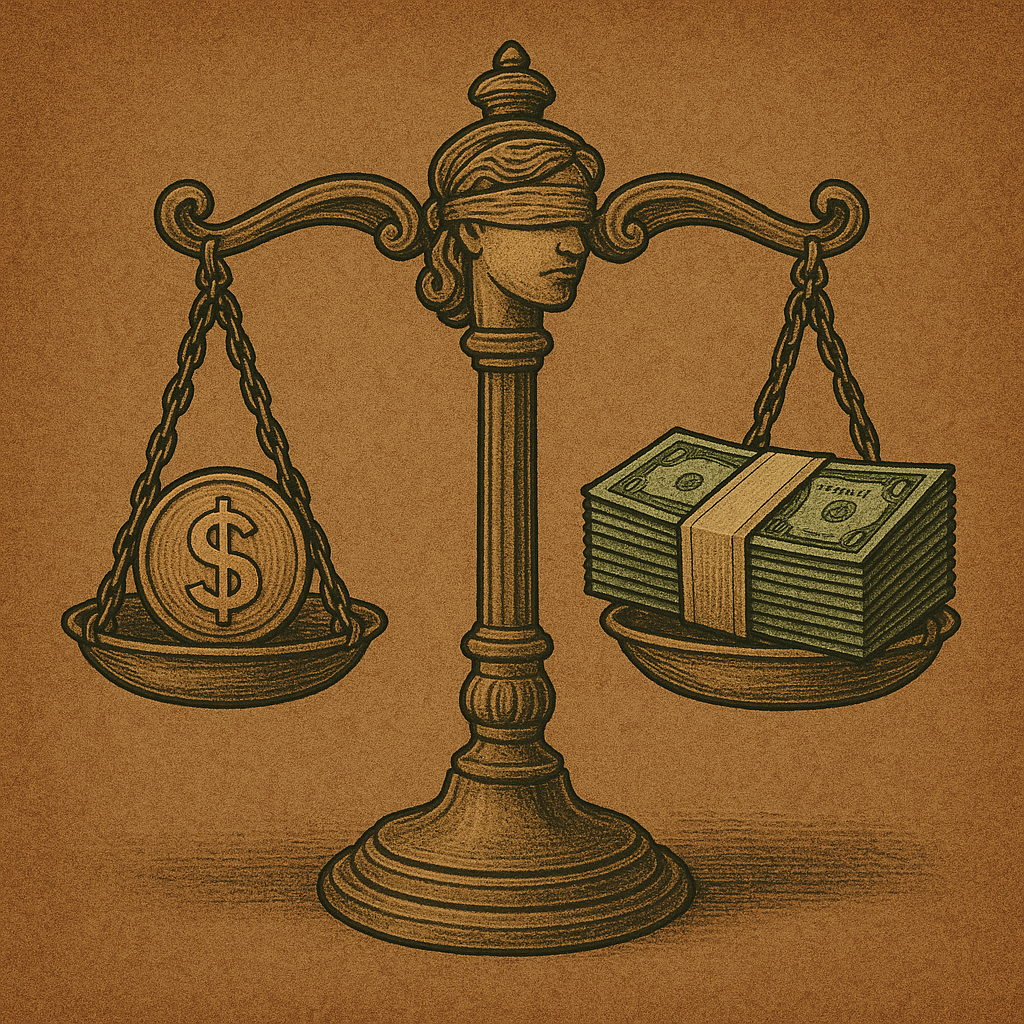
To better understand this difference, it suffices to look at Bitcoin: Satoshi Nakamoto, the creator of Bitcoin, had mined close to one million units of Bitcoin, equivalent to 5% of its total supply. But with UVM this is not the case. No one — not even the creator or the development team — has a special share of the supply. This means completely fair, transparent, and equal distribution for all users. In the UVM ecosystem, no one stands above another. The next wonder of UVM lies in its unparalleled scalability. Satoshi Nakamoto, in creating Bitcoin, had the dream of building a global and decentralized currency; but in my view, he failed to reach that goal. Why? Because a global currency must be capable of processing hundreds of thousands of transactions per second to be able to meet the needs of billions of people across the world. But Bitcoin processes only approximately 7 transactions per second — a figure that is clearly insufficient for such a mission. On the other hand, an international currency must have a smart and extensible infrastructure — meaning it must be programmable, capable of building financial services, and customizable to suit the needs of businesses. But Bitcoin technically lacks these capabilities and acts more like a simple money transfer system.
It is true that Bitcoin today, with a trillion-dollar market cap, leads the cryptocurrency market, but has it truly reached its original goal? One might say that Bitcoin succeeded, but not along the path it was supposed to travel. Like a driver who sets out from Tehran to reach the Caspian Sea at Ramsar, but due to a wrong turn ends up in Bandar Abbas! True, he reached a sea — but was his goal achieved? But UVM has come to be, in the true sense of the word, a global everyday currency — something beyond a mere digital asset. Unlike Bitcoin, which is built on the old and slow infrastructure of first-generation blockchain, UVM has been developed on third-generation blockchain technology and is capable of processing more than 100,000 transactions per second. This means power and speed on par with global payment systems. Furthermore, UVM is implemented on the Polygon network — a network that not only offers high speed and scalability but also provides smart programmability. This means UVM can easily be integrated with the diverse needs of businesses, and a dedicated solution can be built for each application domain. And more remarkably: UVM by default has a built-in store structure — meaning businesses can directly use this infrastructure to sell products and services without any intermediary.
All of these features mean that UVM, unlike Bitcoin, truly has the potential to replace fiat currencies — with a fast, decentralized, programmable structure that is ready to enter the global economy. One of UVM's key features that distinguishes it from financial systems is its complete resistance to sanctions and censorship. Since UVM has been developed on blockchain technology, no institution, government, or centralized power can impose control or restrictions on it. In fact, no one is able to freeze user accounts, halt transactions, or use this currency as a tool of political or economic pressure against individuals or countries. This means UVM is a free and neutral financial tool — not subject to governments, not in the hands of large corporations. Its true owner is its users.
In a world where financial tools have often become instruments of political power, UVM has come to break this chain and provide true freedom in the exchange of value for everyone. In the next article, we will examine the algorithms of the UVM token together in detail. I hope you enjoyed reading this article.